

Why Managed IT Services Aren't Complete Without Integrated Cybersecurity
You have an IT team, but it’s small, and their plates are full. And when logins fail, applications crash, or systems go offline, all eyes turn to them, and sometimes, to you.
Whether you're in operations, HR, finance, or are part of the lean IT crew yourself, this blog is for you. We’ll walk you through how to manage everyday tech fires without burning out your internal team, when to bring in outside help, and how a managed IT provider can act as a true extension of your team.
In this blog, you will find:
🌐 The Reality of Running a Lean IT Team
✅ Survival Tips for Common Tech Issues
🆘 When It’s Time to Ask for Help
🏁 Getting Started Without the Headache
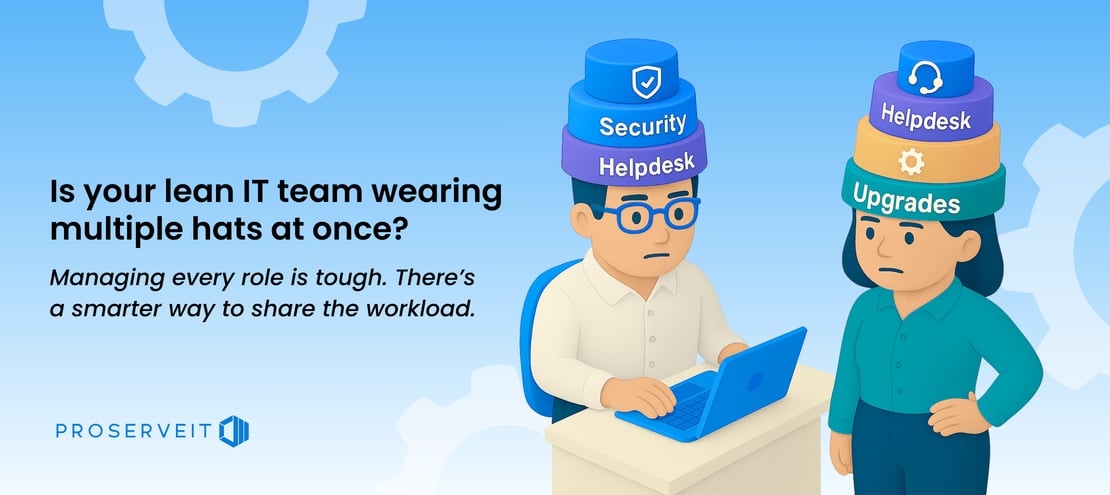
The Reality of Running a Lean IT Team
When so much of the work we do relies on applications, digital tools and more, it means technology expectations are higher than ever, but IT headcount doesn’t always keep up.
According to Robert Half, 42% of IT departments in large companies feel they’re understaffed, and 29% say they don’t have the right team to function effectively1. Now imagine what that looks like for mid-sized businesses with just one or two IT professionals wearing all the hats.
When your IT team is small, they end up doing everything, from resetting passwords to handling security threats and planning infrastructure upgrades. It’s not sustainable. That’s why it’s essential to learn how to manage what you can when it comes to IT, and ask for help for the things you can’t.
Survival Tips for Common Tech Issues
When your internal IT team is small but expectations are high, the pressure can build fast. These practical tactics can help your team stay focused, reduce burnout, and prevent small tech issues from snowballing into big disruptions.
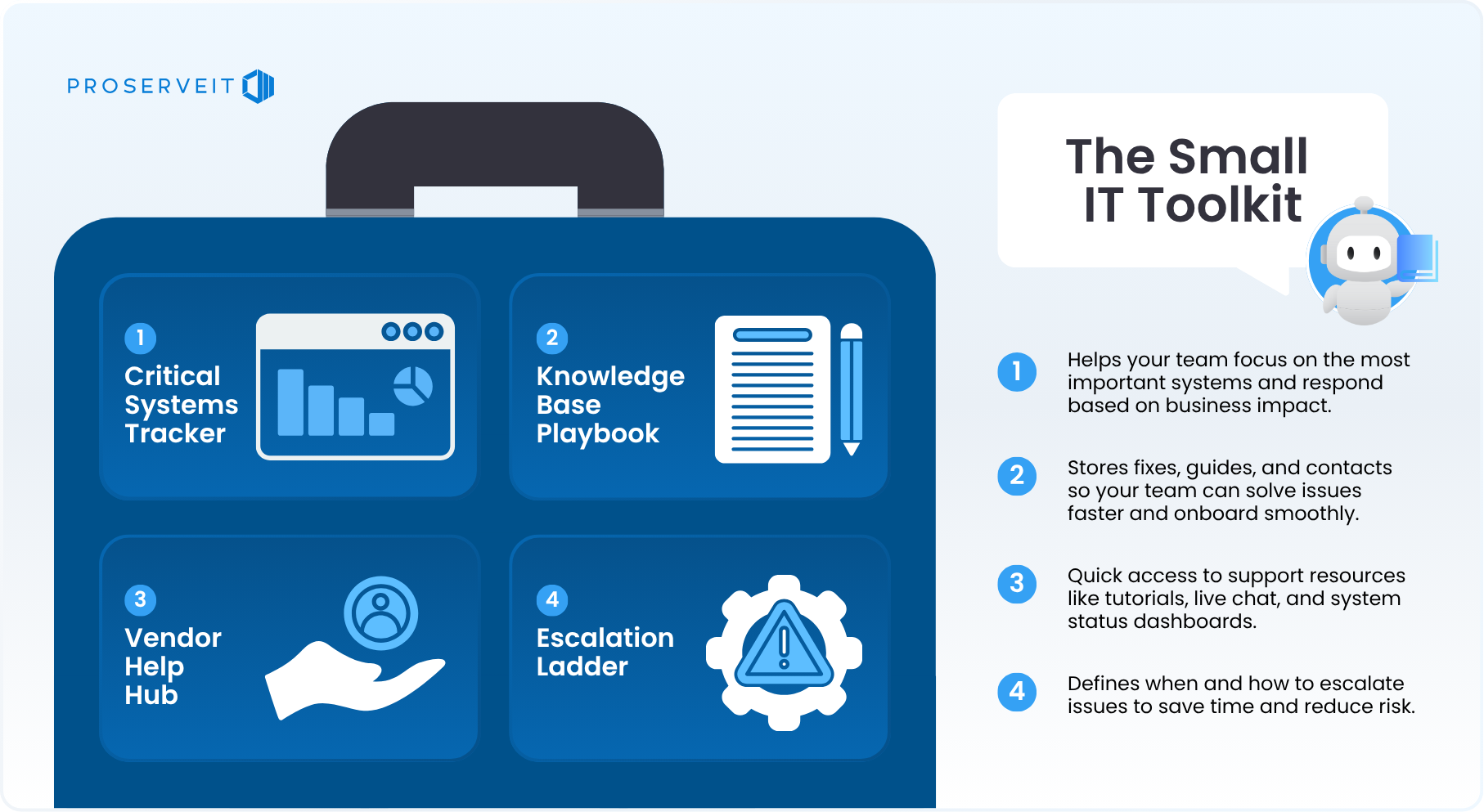
1. Prioritize What’s Business-Critical ‼️
Not all IT problems are created equal, and not all of them need to be solved right now. Encourage your team to identify and document your organization's mission-critical systems. If they’re not sure which systems are the most key, reach out to a managed IT services provider like ProServeIT; we can help identify them for you.
Often, these critical systems include:
- Cloud platforms (e.g., Microsoft 365, Azure)
- Payroll and HR systems
- CRM and client-facing portals
- Internet connectivity
- Security infrastructure
When things go wrong, decide what’s most to least important to solve based on how big (or small) the business impact is. This helps reduce panic, focus efforts, and maintain continuity where it matters most. A simple priority matrix or escalation tree can go a long way in helping your team make smart decisions under pressure.
🛠️ Tip: Use tools like Microsoft Power BI or ServiceNow to track incidents and monitor system health in real-time, so critical issues are flagged early.
2. Keep a Troubleshooting Knowledge Base 🧠
Your lean IT team shouldn’t have to reinvent the wheel every time a known issue reappears. Create and maintain an internal knowledge base or playbook that includes:
- Common error messages and their fixes
- Login credentials (stored securely via a password manager)
- Contact info for key vendors and support teams
- Step-by-step guides for resetting systems, onboarding users, or reconnecting printers
- Escalation contacts and service level agreements (SLAs)
Even a shared OneNote page can dramatically reduce resolution times and reduce internal frustration. This also makes onboarding easier for new team members or temporary coverage during vacations or sick days.
3. Lean on Built-In Product Support 🧱
When tech issues arise, don’t forget about the resources you already have access to, especially if you're using major platforms like Microsoft. Most cloud and SaaS providers offer:
- 24/7 live chat or ticket support
- Video tutorials and how-to articles
- System status dashboards (to confirm if there’s an outage)
- Admin forums and user communities with common troubleshooting tips
Encourage your team to bookmark vendor support hubs and to check those before investing time manually troubleshooting an issue that may already have a published fix.
📌 Example: Microsoft 365 has an entire admin support portal with searchable knowledge, service health reports, and proactive alerts. Of course, if you have a dedicated Cloud Solution Provider for your Microsoft licensing, accessing expert support is even easier!
4. Set Clear Escalation Points 🪜
In a small IT team, it’s easy to fall into the trap of trying to solve everything. But complex issues, especially those related to cybersecurity, server downtime, or third-party integrations, may require more time, expertise, or manpower than your team can offer in the moment.
Create an escalation plan that defines:
- Which types of issues can be handled in-house vs. externally
- Who is responsible for escalation decisions
- Which vendors or managed service providers (MSPs) can be called for support
- What triggers a high-priority or emergency escalation (e.g., widespread outage, security breach)
Make it clear that escalation isn't a failure; it's a smart way to protect your team’s time, reduce risk, and keep your business running smoothly.
💬 Tip: Document escalations in your knowledge base, so your team learns and improves over time.
When It’s Time to Ask for Help
Here are signs that it’s time to stop patching and start partnering:
- You’re spending more time fixing tech than doing your actual job
- Issues are recurring despite your best efforts
- You’re worried about security but unsure how to protect your data
- There’s no backup or recovery plan in case something breaks
If any of these sound familiar, it’s not a failure, it’s a signal. You’ve outgrown the DIY phase of your IT journey.
💡 Related Reading: Top Digital Transformation Challenges for Mid-Sized Businesses
What an MSP Handles for You
A Managed IT Services Provider (MSP) like ProServeIT acts as your full-service IT team, without the cost of hiring one in-house.
Here’s what we can take off your plate:
- Helpdesk Support: 24/7 troubleshooting so you’re not the tech go-to anymore
- Security Monitoring: Protect your systems from cyber threats before they cause damage
- System Updates & Maintenance: Stop worrying about patches and downtime
- Vendor Management: We deal with your SaaS tools, ISPs, and more
- Strategic Planning: Get a roadmap for growth so your tech doesn’t hold you back
Learn more about how ProServeIT can help manage your IT.
📌 Case Study Highlight:
Six Degrees Medical partnered with ProServeIT to build a scalable IT roadmap and manage their Microsoft Azure infrastructure. The result? Improved system performance, stronger security, and more time to focus on what mattered: client success.

💡 Learn more about The Benefits of Managed IT Services
Getting Started Without the Headache
If you're constantly putting out IT fires (or worse, ignoring them), it’s time for a better approach.
At ProServeIT, we specialize in helping lean IT teams and accidental tech leads get back to what they do best. From day-to-day support to long-term strategy, we handle it all so you don’t have to.
🚀 Let’s simplify your IT. Get in touch today.
Or learn more about our Managed IT Services.
- Digital Transformation Consulting
- Vendor Risk Management Tips
- Why IT Strategy Matters
- Resource-Efficient Strategies for Digital Transformation
- The Latest Trends in IT
Sources:
1 DCL Search. "42 Percent of IT Departments in Larger Companies Understaffed, Say Technology Chiefs." DCL Search, Oct. 2018, https://www.dclsearch.com/blog/2018/10/42-percent-of-it-departments-in-larger-companies-understaffed-say-technology-chiefs

Kaavya is a creative enthusiast at ProServeIT, with a passion for writing, designing, and storytelling. As a marketer with a strong foundation in copywriting, she brings a unique blend of creativity and strategic insight to her role, helping to craft compelling content that aligns with ProServeIT’s mission.



Comments