
.png?width=500&height=500&name=cyber%20security_110110543%20%5BConverted%5D%20(3).png)
What Is IT Security & Why It Matters More Than Ever
When Cybersecurity Defines Business Continuity
“I’m afraid we will not survive this,” said the CEO of an organization I was introduced to shortly after they were hit by a cyberattack.
One cybersecurity incident can bring operations to a halt. The very existence of an organization can suddenly be in question. Beyond the immediate financial impact, customer trust is shaken. The conversation quickly shifts from technology management to business survival.
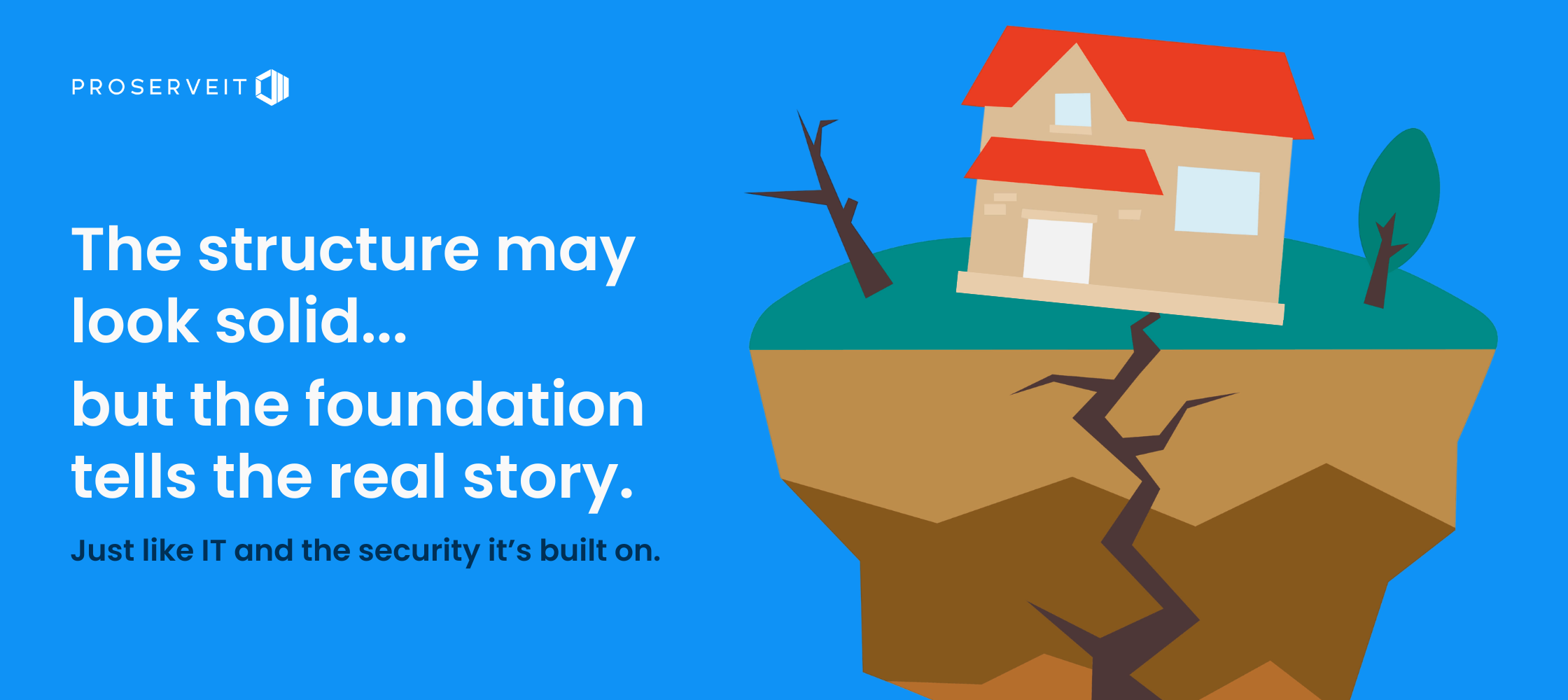
Strong IT operations without strong cybersecurity are like a well-built house on shaky ground. No matter how solid the structure appears, instability at the foundation puts everything at risk.
The Expanding Role of the Modern Managed Services Partner
In our previous discussions on proactive IT support versus reactive IT support and on hospitality in managed services, we explored how modern managed IT services must evolve beyond break-fix models and transactional support.
Today, the role of a managed services provider extends far beyond keeping systems running.
Technology partners are expected to align IT decisions with business strategy, reduce operational volatility, improve cost efficiency, provide clarity amid rapid technology change, and support both leadership teams and employees in an increasingly complex digital environment.
One responsibility now sits at the center of all of this: cybersecurity.
Managed IT services alone are no longer enough. Cybersecurity has become so critical to business continuity that managed security services must be embedded directly into managed IT services, not treated as a separate layer... or worse, an afterthought.
In this blog, we’ll explore:
🧭 Cybersecurity Is Now a Leadership Issue
🧱 Why the Traditional MSP Model Is No Longer Sufficient
🔗 Why Managed Security Services Must Be Embedded in Managed IT Services
🤝 Why a Security-First Model Is a Customer-Centric Approach
👥 The Employee Dimension of Cybersecurity
🔄 The Convergence of IT Management and Cybersecurity
🛡️ A Security-First Model for Modern Managed Services
❓ FAQs
Cybersecurity Is Now a Leadership Issue
For CEOs and executive teams, cybersecurity is no longer simply an IT concern. It is a leadership issue tied directly to:
-
Operational continuity
-
Customer trust
-
Regulatory exposure
-
Financial risk
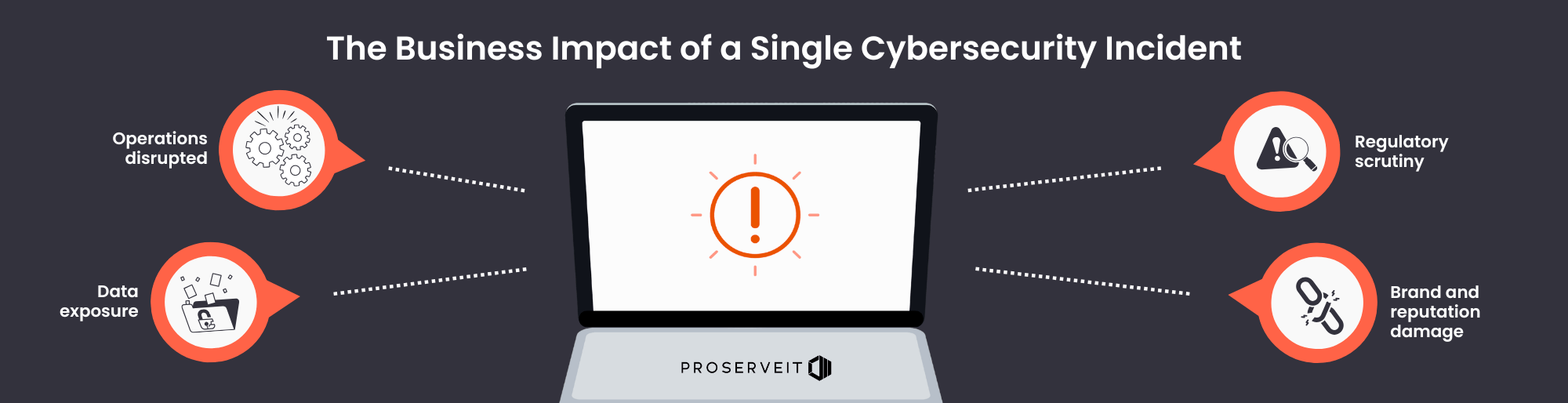
The Business Impact of a Single Cybersecurity Incident
A single breach can:
-
Interrupt operations
-
Expose sensitive data
-
Trigger regulatory investigations
-
Damage a brand in ways that can take years to repair
Even when financial losses can be quantified, reputational damage often cannot.
Cyber Risk Is Accelerating Faster Than Organizations Can Respond
What makes this challenge even more complex is the speed at which the risk landscape is evolving. AI is accelerating innovation in remarkable ways, but it is also accelerating cyber threats.
Attack surfaces are expanding, threat actors are becoming more sophisticated, and the window for response continues to shrink.
In this environment, cybersecurity cannot sit beside IT management as an optional enhancement. It must be treated as a foundational component of how technology environments are designed, monitored, and governed.
What I find encouraging is that most CEOs are aware of this shift. The intent is there. The challenge lies in how organizations operationalize that awareness.
Why the Traditional MSP Model Is No Longer Sufficient
Historically, many organizations relied on a traditional managed services provider (MSP) model where infrastructure management and cybersecurity were handled separately.
Systems were monitored for uptime and performance. Devices were patched and maintained. Cloud environments were managed.
Cybersecurity, however, was often addressed through:
-
Periodic risk assessments
-
Standalone tools
-
Separate vendors
-
Occasional consulting engagements
This fragmented approach creates gaps.
The Limits of a Fragmented Technology and Security Model
Cybersecurity risk does not respect organizational boundaries. Small risks can create material business risk:
-
A vulnerability in endpoint management can compromise identity security.
-
A misconfigured cloud resource can expose sensitive data.
-
A delayed patch can create entry points for attackers, even when systems appear operationally healthy.
As a result, the MSP vs. MSSP (managed security services provider) distinction has become increasingly artificial. Technology operations and cybersecurity are now deeply interconnected. Treating them as separate disciplines introduces blind spots precisely where modern threats tend to emerge.
Why Managed Security Services Must Be Embedded in Managed IT Services
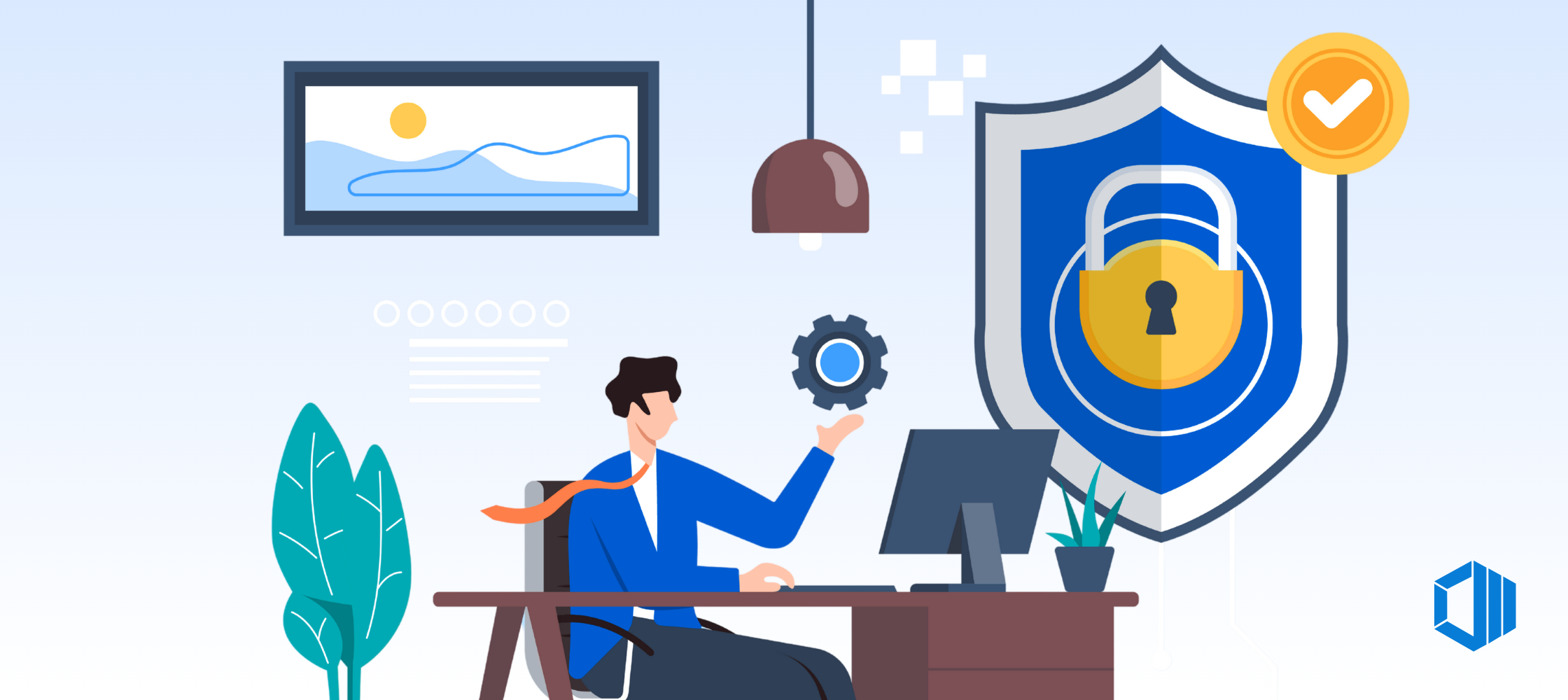
A modern MSSP model integrates security monitoring, threat detection, and risk management directly into day‑to‑day IT operations.
When managed security services are embedded within managed IT services, organizations benefit from a more cohesive and resilient operating model.
-
Infrastructure monitoring and threat detection work together
-
Endpoint management aligns with identity protection
-
Vulnerability management connects directly to patching cycles and configuration management
-
Security posture assessments inform operational planning rather than existing as isolated reports
For leadership teams, this integration reduces the likelihood that critical signals fall through organizational cracks.
It also simplifies accountability. Instead of coordinating multiple vendors with overlapping or unclear responsibilities, organizations gain a clearer line of ownership for both operational stability and cybersecurity resilience.
This is the difference between reacting to incidents and actively managing risk.
.png?width=1897&height=950&name=IT%20Strategy%20for%20Business%20Growth%20(1).png)
Why a Security-First Model Is a Customer-Centric Approach
In our earlier discussion on hospitality in managed services, we explored the idea that technology support should ultimately serve people, not just systems.
A security‑first managed services model is a natural extension of that philosophy.
If managed services exist to help organizations operate with confidence, then protecting them from catastrophic cyber risk must be central to that service model.
Treating cybersecurity as optional or peripheral places unnecessary burden on leadership and exposes the organization to avoidable harm.
Preventing a breach is one of the most meaningful ways a technology partner can protect a client’s business, employees, and customers.
In that sense, cybersecurity is not merely technical protection. It is a form of organizational care.
The Employee Dimension of Cybersecurity
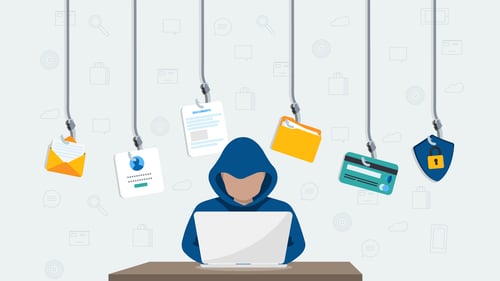
Cybersecurity conversations often focus on executive-level risk, but employees are frequently the first point of contact with potential threats.
Many breaches begin with:
-
phishing emails
-
compromised credentials
-
unsecured devices
...not dramatic system failures.
An integrated managed IT and cybersecurity services model strengthens the environment in which employees operate.
How Integrated Security Reduces Human‑Driven Risk
It does this through the following capabilities, all of which reduce the likelihood that routine mistakes escalate into systemic incidents:
-
Endpoint protection
-
Identity management
-
Secure access policies
-
Continuous monitoring
When employees understand that the systems around them are designed to protect both their work and the organization, confidence increases. Security stops feeling like an obstacle and becomes part of a well-designed operational environment.
The Convergence of IT Management and Cybersecurity
The modern technology landscape no longer allows a clean separation between infrastructure management and security oversight.
Cloud platforms, identity management, endpoint protection, AI tools, compliance requirements, and data governance are now deeply interconnected. As these domains converge, so must the service model supporting them.
Organizations increasingly benefit from partners who can manage integrated IT and cybersecurity services as a unified system. This approach enables:
-
Earlier risk detection
-
Faster response to emerging threats
-
Technology strategies that support both innovation and protection
For leadership teams navigating rapid technological change, this integration delivers something invaluable: confidence that stability and security are being addressed together, not independently.
.png?width=1078&height=277&name=Unified%20IT%20+%20Security%20support%20(1).png)
A Security-First Model for Modern Managed Services
Managed IT services remain essential. Infrastructure must function reliably. Systems must be monitored. Employees must have access to the tools they need to do their work.
But in today’s threat environment, stability without security is incomplete.
A modern managed services model recognizes that operational reliability and cybersecurity resilience are inseparable.
Embedding managed cybersecurity services within managed IT services ensures that technology environments are designed, monitored, and protected as a single system.
This reflects the same human-centered philosophy explored in earlier articles, one that prioritizes the wellbeing of the organization as a whole.
Preventing disruption protects productivity. Preventing breaches protects organizational continuity. Protecting both safeguards the people who rely on the organization every day.
In a digital world where innovation and cyber risk move at the same speed, security-first managed services are no longer optional. They are a necessary evolution of responsible, modern technology leadership.
This evolution builds on earlier discussions about proactive IT support and hospitality‑driven managed services.Explore both here:
🛠️ Proactive IT Support vs Reactive IT Support: What Leaders Expect
🤝 Hospitality in Managed Services: Why Proactive IT Support Isn't Enough
Frequently Asked Questions (FAQS)

Mihae Ahn, MBA, is the vice president of Marketing at ProServeIT. She is strongly committed to gender equity and social justice. As a published author and a marketing leader, Mihae expertly balances her professional accomplishments with her roles as a mother, wife, and dedicated lifelong learner. Her passion for making a positive impact shines through both in her career and personal life.

Comments