

5 Tips for Vendor Risk Management: Protect Your Organization
?
Looking to improve your SharePoint team site? Start with the tasks your team needs to do: find documents, check updates and work together. These eight tips will help you plan a clearer layout, improve navigation and make shared resources easier to find. This guide focuses on modern SharePoint in Microsoft 365.
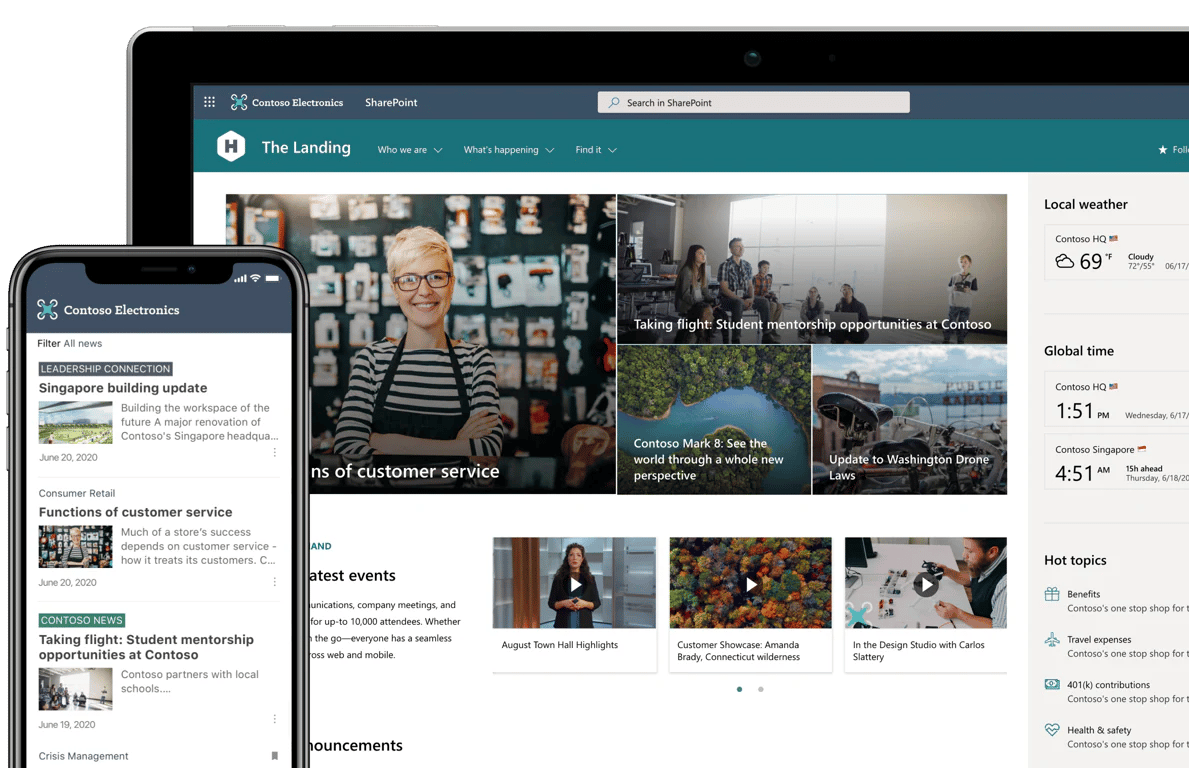
A SharePoint team site gives a group a shared place to work with documents, lists, pages and updates. Use it when people need to contribute and work together.
A communication site serves a different purpose: sharing information with a wider audience. For example, an organization’s news portal may suit a communication site, while a project workspace may suit a team site.
👉 If you need an introduction to the platform, read What is SharePoint in plain English?
Before you change the layout, write down the three tasks people use the site for most often. They might need to find approved documents, check project progress or complete onboarding tasks.
Then decide what belongs on the homepage and what belongs on another page. Give frequent tasks a clear route from the homepage. Move supporting detail to pages with useful names.
Name a person who will keep the site current. A layout loses value when its links, contacts or instructions go out of date.
Plan your site around the work your team needs to do. For modern SharePoint, Microsoft recommends separate sites for distinct topics, tasks or areas of work rather than a deep hierarchy of subsites. You can connect related sites through navigation and hubs.
Within your team site, give people clear routes to important documents, updates and resources. Search helps, but people may not know which words to use. They may know which document library they need, so make that library easy to find through navigation
📖 For more guidance, see Introduction to SharePoint information architecture - SharePoint in Microsoft 365
Use navigation labels that tell people what they will find, such as Project documents, Training or Team contacts. Keep frequently used resources easy to reach without adding every page to the navigation.
Use the Quick links web part on your homepage for tools and resources your team opens often. Give each link a clear name so people know where it leads.
Check access as well as navigation. A useful link still causes frustration if someone cannot open the document or page behind it.
Navigation options depend on your site type and permissions.
📖 Follow Microsoft’s guide to customising SharePoint navigation for the steps that apply to your site.
Tip 3. Keep in Mind Cross-Device Usability
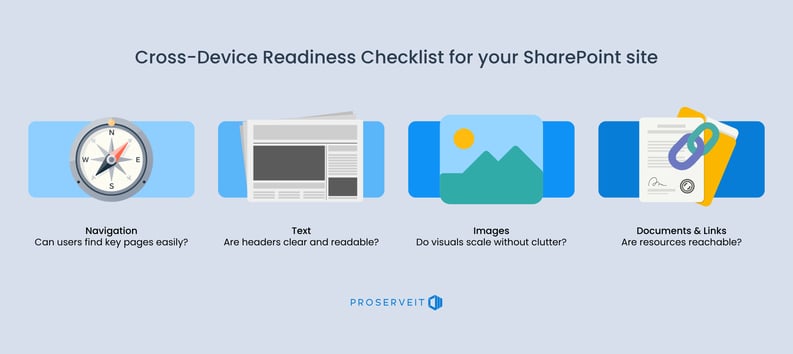
Your team may open SharePoint on different devices. Before sharing your site, check that people can read the content, use the navigation and reach important resources on both a desktop and a phone.
Try these checks on each device:
↘️ Navigation: Can you find and open the main pages without difficulty?
🔡 Text: Are headings and instructions easy to read?
🖼️ Images: Do they fit the screen without making text difficult to read?
📁 Documents and links: Can you open the resources your team needs?
Test a real task, such as finding an approved document or checking a project update. Fix anything that makes the task difficult before sharing the site with your team.
Related blogs you might like:
👉 What is SharePoint in Plain English?
👉 6 Types of SharePoint Workflows: Make Your Life Easier with Automation
Tip 4. Put Useful Resources and Updates on Your Homepage
What would someone need to find when they first open your team site? Use that question to decide what belongs on the homepage.
Prioritise the resources people need most often, even when those resources do not change frequently. Then add updates that help your team stay informed.
For example:
- A project team: current documents, progress updates and upcoming deadlines.
- An onboarding team: training resources, an onboarding checklist and key contacts.
- An everyday team workspace: shared files, frequently used tools and team announcements.
Use SharePoint web parts, the content blocks that make up a page, to display these resources. Give each section a clear heading and remove outdated content.
Tip 5. Use Clear Layouts and Helpful Visuals
Arrange your homepage so people can quickly see what matters. Put important resources near the top, group related content and use clear headings.
Choose images that explain something or help people recognise the right resource. Add descriptive alt text, and keep essential instructions in the page text so readers can understand them without seeing the image.
See the Microsoft SharePoint team site examples below for ideas you can apply to your own layout.
Use these examples to choose a layout that supports your team’s work. You do not need to include every section a template offers.
Tip 6. Help People Get Started with Your Team Site
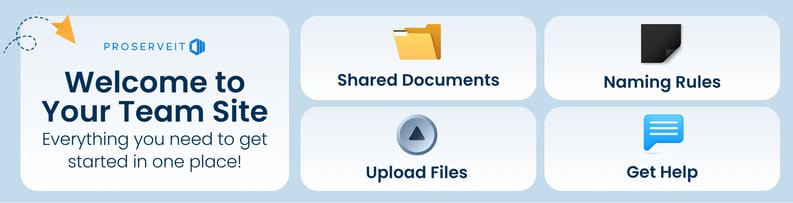
Add a short welcome message explaining what the site is for and what people can find there. Include clear links to the resources they need first.
Provide a short guide covering:
- Where to find shared documents.
- How to upload files and complete any required document details.
- Which naming rules your team follows.
- Who to contact for help.
Keep the guide easy to find and update it when your team’s processes change. It can support both the initial site launch and new employees joining later.
Use clear file names, useful folders and document details to help your team find information. In SharePoint, you can add columns for details such as project name, document type or approval status. These details are often called metadata.
For example, a project document library could include:
- Project: which project the file belongs to.
- Document type: a proposal, meeting note or report.
- Status: draft, under review or approved.
Create saved views to show useful groups of files, such as approved documents or files for a particular project.
Choose an approach your team can maintain. Folders and metadata can work together; you do not need to remove every folder. Explain which details people should enter when adding files.
This is separate from site structure. Tip 1 explains how you organise and connect sites. This tip explains how you organise documents inside a library.
Before sharing your site with the whole team, ask a few colleagues to try it. Include someone who is less familiar with the content.
Ask them to complete these tasks without your help:
- Find a current document.
- Locate the latest team or project update.
- Find the person to contact with a question.
- Explain where they would upload a new file.
Watch where they hesitate. Ask what felt unclear, then adjust the navigation, labels or layout and test those tasks again.
After launch, give your team a way to report problems or suggest changes. Assign someone to check links, review content and remove outdated information.
 Source: Microsoft
Microsoft provides team site templates for different types of work. Use these examples to decide what your team needs on its homepage.
Standard Team Site for Everyday Collaboration
Microsoft’s Standard team template offers a starting point for sharing content and keeping a team connected.
For your own site, prioritise shared documents, frequently used tools and current updates. Give each section a clear purpose so people know where to go.
🔗 Explore Microsoft’s template guide and find the Standard team example.

Project Management Team Site
Microsoft’s Project management template brings project documents, updates and tracking resources together.
Use this example to plan how people will find the current project status, upcoming deadlines and working files. Keep active work easy to distinguish from older reference material.
🔗 Explore Microsoft’s Project management team site example.

Employee Onboarding Team Site
Microsoft’s Employee onboarding team template helps new employees find training, onboarding tasks and team information.
Organise this type of site around the questions a new employee asks: What should I do first? Where are the instructions? Who can help?
Put those answers near the top and provide clear links to the next steps.
🔗 Explore Microsoft’s Employee onboarding team site example.
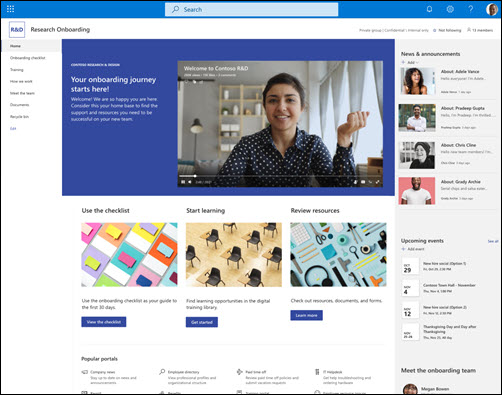
These are Microsoft template examples. Check which templates your organization makes available before choosing one.
SharePoint’s Section Design Ideas feature suggests layouts, text formatting and images based on the content in a page section.
When editing a page, open Design ideas using the sparkle icon in the page toolbox. Review the suggestions and select one to apply it. Use Undo if you prefer the previous layout.
The feature works with specific combinations of banner, text and image web parts. Sections containing other web parts, such as Quick links or People, may not receive suggestions. Full-width and vertical sections are also unsupported.
Use the suggestions as a starting point. Check that the layout makes important information easy to find and that suggested images suit your content.
📑 See Microsoft’s instructions and examples for Section Design Ideas.

Once you choose a suitable template, you can use it as a starting point for your site. You need site owner permissions or higher to apply it.
- Open your SharePoint site.
- Open Settings and select Apply a site template.
- Select a template, review its details and choose Use template.
- Review the pages and resources it adds. Replace sample content with information your team needs.
- Check your changes, then publish or republish the relevant pages.

Applying a template to an existing site does not automatically merge your content with the new layout. Microsoft explains that it creates a new default homepage and other content. Your existing pages, lists and libraries remain available in Site contents.
Before changing an existing site, review the changes with its owner and plan how to handle the current homepage.
📗 Read Microsoft’s instructions for applying and customizing SharePoint site templates.
Copilot in SharePoint can help you create and edit pages using natural-language instructions. You can describe what a page should cover, then review and refine the content and layout it suggests.
For example, you could ask it to draft an onboarding page introducing your team, explaining the first steps and directing new employees to useful resources.
Copilot can also help rewrite text within SharePoint pages and news posts. Use it to shorten a long introduction, adjust the tone or make instructions clearer.
Review the result before publishing. Check names, facts, links and instructions, and make sure the page meets your team’s needs.
➡️ For a broader introduction to Copilot across Microsoft’s tools, read our Microsoft Copilot guide
Check Access Before You Start
You need a Microsoft 365 Copilot licence and the appropriate SharePoint permissions. The experience you see also depends on your organisation’s settings and Microsoft’s rollout.
Some advanced capabilities, including creating entire sites and solutions, require additional usage-based billing through Copilot Credits. Check with your Microsoft 365 administrator before planning around those features.
🗒️ Explore Microsoft’s guide to authoring with Copilot in SharePoint.
Conclusion
A useful SharePoint team site helps people find information and get their work done. Start with your team’s needs, make navigation clear and keep documents and resources organised.
Microsoft’s templates can give you a starting point. Design Ideas and Copilot can help you refine layouts and content where available, but review the results and test the site with your team before publishing.
Keep improving the site as your team’s needs change. Clear ownership, current content and feedback from the people using it will help it stay useful.
SharePoint Online helped Arrowsmith collaborate more efficiently, build workflows, run documents, and manage their IP (intellectual property) securely.

Frequently Asked Questions (FAQs)

Cassandra is a dedicated content marketer at ProServeIT, specializing in SEO and blending creativity with strategic insight in every project. With a deep passion for technology, particularly in AI and Virtual Reality, Cassandra stays at the forefront of digital advancements, consistently integrating the latest innovations into her work. Her enthusiasm for learning and innovation drives her to push the boundaries of what's possible, helping ProServeIT stay ahead in the ever-evolving tech landscape.


Comments