.png?width=281&height=53&name=PSIT%20Blog%20Graphic%20Icons%20(10).png)
.png?width=281&height=53&name=PSIT%20Blog%20Graphic%20Icons%20(11).png)
.png?width=281&height=53&name=PSIT%20Blog%20Graphic%20Icons%20(12).png)
.png?width=281&height=53&name=PSIT%20Blog%20Graphic%20Icons%20(13).png)
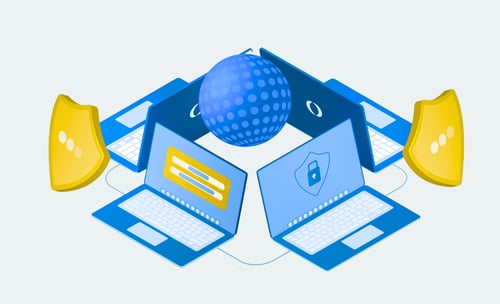
Why Managed IT Services Aren't Complete Without Integrated Cybersecurity
Remember when showing up to the office five days a week was just… how work worked? Alarm clocks. Commutes. Assigned desks. No Wi‑Fi debates.
That version of work has quietly packed up its things and moved out.Hybrid work is now the norm. Teams are spread across offices, home setups, coffee shops, and everywhere in between, all relying on a growing mix of cloud apps, on‑prem systems, and mobile devices to get things done.
From an IT perspective, this flexibility is a bit like running several mini‑cities at once. Each one has its own infrastructure, access rules, and security needs. And keeping them all connected, protected, and running smoothly? That’s where things get complicated.
Enter hybrid IT.
Hybrid IT brings order to the chaos by combining the reliability and control of on‑premise infrastructure with the scalability and convenience of the cloud, without forcing you to choose one over the other.
In this blog, we’ll unpack what hybrid IT actually means, why so many businesses are embracing it, and how managed IT services help keep everything secure, connected, and running smoothly.
In this blog, you will find:
⚡ Why Businesses Choose Hybrid IT
💣 Key Challenges of Managing Hybrid IT
🛠️ How Managed IT Services Simplify Hybrid Environments
🚀 Simplify Your Hybrid IT with ProServeIT Managed Services
❓ FAQs
What Exactly Is Hybrid IT?
Hybrid IT is a bit like an ice‑cream sundae.
Instead of forcing you to pick just one flavor, it lets you have the best of all worlds.
At its core, hybrid IT is an IT setup where your organization uses a mix of:
- On‑premises infrastructure
(servers, databases, storage, applications you control directly) - Cloud services
(Microsoft 365, Azure, SaaS apps, cloud storage, virtual machines
The magic isn’t just in having both, it’s in how they’re blended. Hybrid IT lets you stay flexible without giving up control. And in today’s business landscape, that balance is gold.
.png?width=2240&height=1000&name=Hybrid%20IT%20On%20prem%20vs.%20Cloud%20infra%20(1).png)
Here’s a simple example:
Say your organization is especially protective of sensitive financial data. For compliance reasons, you decide to keep it on‑prem, safely tucked away where you have full oversight.
But when it comes to collaboration tools like Teams or SharePoint, you’re perfectly happy to run those in the cloud. It makes access easier, supports more users, and works seamlessly across devices.
Hybrid IT lets you decide what lives where. Intentionally.
And that matters because modern work isn’t confined to one place anymore, but calls everything in the work ecosystem, like docs, emails, files etc. needs to be accessed securely, reliably, and without friction.
That’s the reality hybrid IT is built for.
🔎 Adjusting to hybrid work models is just one challenge facing today’s businesses and organizations.
Read this blog to learn about some others: Top Digital Transformation Challenges for Mid-Sized Businesses.
Why Businesses Choose Hybrid IT
Hybrid IT didn’t become popular by accident. Businesses are choosing it because it works in the real world, where nothing is ever as simple as “all cloud” or “all on‑prem.” It allows flexibility without sacrificing reliability or cost control.
Here’s why so many organizations are leaning into it:
.png?width=281&height=53&name=PSIT%20Blog%20Graphic%20Icons%20(9).png)
1. Flexibility to Support Hybrid Work
Some tools love the cloud. Others? Not so much.
Hybrid IT lets each workload live its best life.
Collaboration tools can float freely in the cloud, while systems that need tighter control, lower latency, or stricter oversight stay closer to home.
2. Better Cost Control
Cloud pricing is incredibly flexible... and that’s actually the point.
Hybrid IT helps you use that flexibility thoughtfully. By keeping long‑term, steady workloads on‑prem, where costs are easier to forecast, and leaning on the cloud when you need elasticity or short‑term scale, you get the best of both worlds.
Think of it as a well‑planned grocery list instead of impulse shopping. Same store. Smarter choices.
3. Scalability When You Need It
Some days are calm. Other days feel like everything hits at once.
Hybrid IT gives you cloud resources that can scale up quickly when demand spikes, like during launches, busy seasons, surprise growth, and scale back down when work calms down again.
Just enough power, right when you need it.
4. Improved Security and Compliance
Hybrid IT lets you keep sensitive data and regulated workloads close and tightly controlled, while still taking advantage of the serious security muscle built into modern cloud platforms.
It’s a careful balance, and when done right, it gives you flexibility without that nagging feeling that something important is exposed.
Which is exactly why regulated industries are such big fans.
5. Smooth Integration During Digital Transformation
Digital transformation opens the door to new ways of working and growing.
Hybrid IT helps you walk through that door with confidence. It lets you modernize in stages, upgrading systems, moving workloads, and trying new tools while keeping what already works firmly in place.
No rush. No pressure. Just forward momentum that feels steady, intentional, and right for your business.
.png?width=2240&height=1000&name=5%20reasons%20why%20businesses%20choose%20hybrid%20IT%20(1).png)
Is Hybrid IT Right for You?
Hybrid IT is about creating an IT setup that fits your business as it is now, while staying flexible enough for what’s coming next.
Hybrid IT is likely a great fit if you find yourself nodding along to any of the following:
✅ Your team works in more than one place
Some days it’s the office, some days it’s home, and sometimes it’s wherever Wi‑Fi happens to be strong. Work keeps moving, no matter the location.
✅ You already use cloud tools, but not everything belongs there
Microsoft 365, Teams, and SharePoint are part of daily life, but certain systems still make more sense on‑prem for performance, security, or compliance reasons.
✅ You’re growing, changing, or planning ahead
New hires, new projects, seasonal demand, or long‑term growth all require flexibility without overbuilding infrastructure “just in case.”
✅ Security and compliance matter a lot
You need strong controls over sensitive data, but you also want the modern security capabilities that cloud platforms offer.
✅ Your IT team wears many hats
Whether your team is small or stretched thin, you need an environment that’s easier to manage, not one that adds complexity at every turn.
✅ You want to modernize thoughtfully
You’re ready to move forward, but you don’t want to rush change or disrupt what’s already working.
Key Challenges of Managing Hybrid IT
Hybrid IT is incredibly capable, but it’s not a plug‑and‑play situation. Managing a blended environment takes coordination, consistency, and ongoing care.
Here are some of the most common challenges leaders run into:
🔗
1. Integration Across Systems
Cloud and on‑prem systems are supposed to work as one team.
When they work, everything feels seamless. When they don’t, everyone notices. Slow access. Login hiccups. Workflows that stall right when someone’s on a deadline.
Much like a relay race, the handoff matters just as much as the sprint. Keeping systems in sync takes thoughtful integration and regular upkeep, especially as tools, users, and workloads change.
📚Related reading: The Future of Cloud Computing and 22 Cloud Security Best Practices & Strategies
🔒
2. Security Across Multiple Environments
A hybrid environment naturally comes with more moving parts. More users. More devices. More identities. More places for data to live. More opportunities for attackers to slip in.
Each environment might be secure on its own, but the real challenge is making sure security works the same way everywhere, without slowing people down or locking them out at the worst possible time.
It’s less about building taller walls and more about making sure all the doors lock the same way.
👁️🗨️
3. Limited Visibility
As hybrid environments grow, visibility can start to feel a little… foggy.
You’re keeping an eye on servers, endpoints, cloud workloads, and networks, often across different dashboards and tools.
Without a single, unified view, small issues can quietly pile up before they make themselves known.
Clear visibility isn’t just about reacting faster. It’s about knowing what’s happening across your environment without needing five tabs, three logins, and a strong cup of coffee.
👩💻
4. Growing Burden on Lean IT Teams
Behind the scenes, IT teams are often doing more than anyone realizes.
Instead of focusing on strategic improvements, they spend time chasing down integration issues, troubleshooting access problems, and keeping everything running across multiple environments. It’s important work, but it’s also exhausting when it becomes the norm.
Over time, that constant “just keep things running” mode leaves less room for planning, optimization, and innovation, the work that actually moves the business forward.
👉 For more on improving operational efficiency, you may want to check out these related blogs:
- How to Handle IT Issues When You’re Running a Lean IT Team
- Can the Right IT Strategy Improve Operational Efficiency?
How Managed IT Services Simplify Hybrid Environments
A hybrid environment works best when it’s actively looked after. With multiple systems, platforms, and users in play, someone needs to keep an eye on the big picture while also handling the day‑to‑day details.
That’s where Managed IT Services come in.
A partner like ProServeIT acts as an extension of your team, helping your hybrid environment stay secure, connected, and running smoothly.
Here’s what that looks like in practice:
🌐
1. Centralized Monitoring Across Cloud and On-Prem
Imagine trying to navigate a city using five different maps: one for roads, one for transit, one for bike lanes, one that’s slightly outdated, and one that only works on Tuesdays.
That’s what managing hybrid IT without centralized monitoring can feel like.
Managed IT Services bring everything into one clear view including cloud workloads, on‑prem infrastructure, endpoints, and networks.
When something goes wrong, you don’t have to guess where the issue started.
You can see it, understand it, and fix it. No scavenger hunts required.
🛡️
2. Stronger Security Across All Systems
In hybrid environments, security has a tendency to drift.
One policy here. Another rule there. A small exception someone made months ago and forgot about.
Managed IT Services help keep security consistent across cloud and on‑prem systems, from identity management and access controls to threat detection and response.
The goal isn’t to make security louder or stricter. It’s to make it reliable.
Security that quietly does its job, no matter where your data lives or where your people log in from.
📲
3. Expert Support for Integration Issues
Most days, cloud and on‑prem systems coexist peacefully.
And then one day… they don’t.
Something breaks in the handoff. Data doesn’t sync. An app works perfectly on one side and not at all on the other.
This is where Managed IT Services really shine.
Instead of treating symptoms, your MSP looks for the root cause, tracing issues across environments until they find what actually needs fixing. Often, this happens before users even know there was a problem.
The best integrations are the ones no one has to think about.
🔮
4. Strategic Guidance for Future Planning
Hybrid IT can easily turn into a patchwork of “we’ll deal with this later” decisions. Managed IT Services help you zoom out.
They look at your environment as a whole, your workloads, your business goals, your growth plans, and help build a roadmap that makes sense. Not everything has to happen at once. But everything should be heading in the same direction.
Progress, with intention.
💼
5. Reduced Workload for Your Internal Team
Here’s the quiet truth we all know: most internal IT teams aren’t short on skill. They’re short on time.
When your team isn’t constantly pulled into monitoring, troubleshooting, and maintenance, they can focus on the work that actually moves the business forward. Planning. Improving. Innovating.
You don’t need a bigger team. You need a smarter, more scalable way to support the one you already have. That's where Managed IT becomes the perfect shoulder to lean on.
For more on tailoring technology to your business goals, see:
👉 How Custom IT Solutions Drive Business Efficiency
👉 How to Choose Tools for Your Company
.png?width=1066&height=274&name=Managed%20IT%20services%20for%20Hybrid%20IT%20(2).png)
Simplify Your Hybrid IT with ProServeIT's Managed IT Services
Hybrid IT doesn’t have to feel like a balancing act you’re constantly adjusting.
With the right partner, it starts to feel steady.
The cloud keeps things flexible. Your on‑prem systems stay firmly under your control. And behind the scenes, everything stays secure, connected, and quietly taken care of.
That’s what ProServeIT is here for.
🕵️ Explore ProServeIT’s Managed IT Services
We help make hybrid IT feel less like something you manage and more like something that just works, day in, day out.
Frequently Asked Questions (FAQs)

Kaavya is a creative enthusiast at ProServeIT, with a passion for writing, designing, and storytelling. As a marketer with a strong foundation in copywriting, she brings a unique blend of creativity and strategic insight to her role, helping to craft compelling content that aligns with ProServeIT’s mission.



Comments